

There is much more to facial skin condition improvement and rejuvenation than simply making wrinkles disappear.
Currently, aesthetic medicine offers a comprehensive approach that allows doctors to minimize the signs of aging and improve skin tone, texture, and quality by using bespoke therapeutic alternatives that respect a natural look and the patient’s individuality. To this end, the professional must consider the patient’s genetics, morphology, and face structure, as well as her/his aging process.
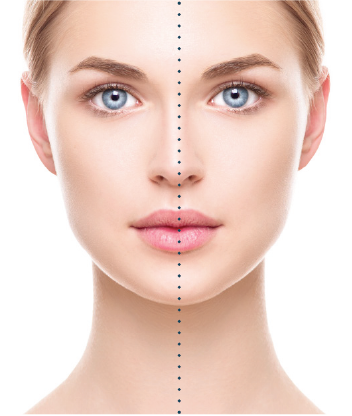
The VPA Technique® is a new method that combines three injection techniques in one session. Using a specific injection sequence for each application area allows the doctor to adapt to the specific features and needs of each patient, and effectively bio revitalize, restucture, and firm the skin.
It establishes an application algorithm that aims to contribute to the administration of compo nents into the superficial anatomical layers of the cranium, vertebra, and facial regions to reduce the biological deterioration in those tissues from the aging process. This technique has been designed to administer INNO-CE® Mesha® Essence, INNO-CE® Moist 1.5, INNO-CE® Bi-Dens 2.5, or INNO-TDS® solutions.
This new procedure was developed by Dr. Víctor García Guevara, an internationally renowned specialist in Aesthetic Medicine and Mesotherapy.
He is the founder of both the Venezuelan Scientific Society of Aesthetic Medicine and the Foundation Center for Aesthetic Medicine Studies (FUCEME). His commitment to teaching and research has led him to participate in several clinical studies and be the author of many publications in prestigious scientific journals.
He has an impressive professional trajectory and is nowadays an influential figure who works as a speaker at he most important aesthetic congresses.
A holistic and full-face approach to improve the overall skin health and quality.
Restores and redefines the tissue.
Revitalizes and enhances skin firmness, elasticity and luminosity.
- Revitalize the skin
- Increase density
- Improve firmness
Combining those three methods into one session provides a synergic effect from each method’s actions and properties.
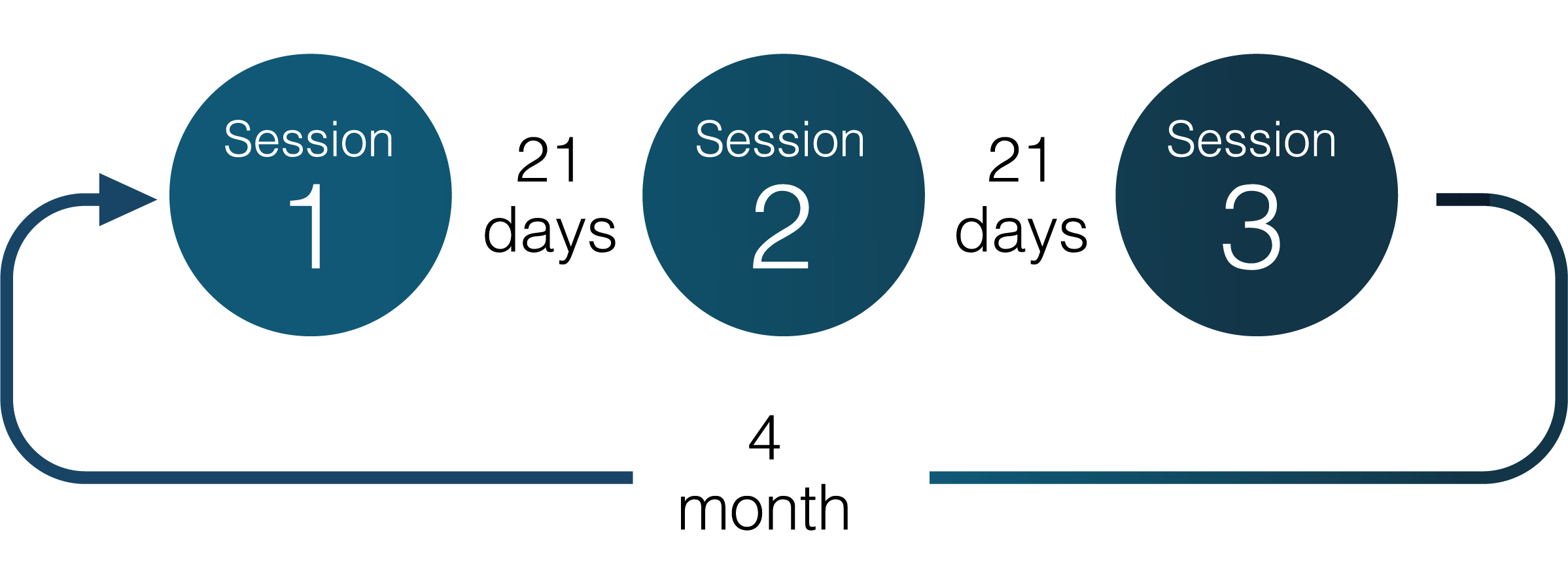
The vectors provide a tightening effect, the pillars create forces that counteract the natural formation of expression lines or wrinkles, and the anchors increase the skin’s density. It provides more tissue support and a firming and biorevitalizing effect. A single session provides results that last for 60 to 90 days. The results from 2 to 3 sessions usually last for 4 to 6 months.
1.1 Products to be administered with VPA technique®
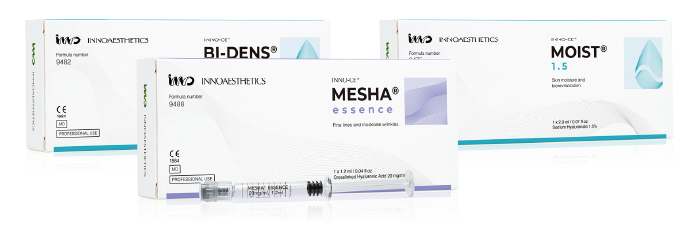
VPA Technique® has been designed to administer no-crosslinked or low-crosslinked INNO-CE® hyaluronic acid solutions.
Administrating INNO-CE® Mesha® Essence, INNO-CE® Moist 1.5, or INNO-CE® Bi-Dens 2.5 using VPA Technique®, the hyaluronic acid is strategically distributed to promote cell regeneration and collagen production in crucial areas, slowing down wrinkle formation and reducing deep wrinkles and expression lines.
Product selection should be based on the patient’s age as well as the functional and structural condition of their skin.
In younger patients, priority is given to deep hydration and optimization of the dermal environment with INNO-CE® Moist 1.5. In patients presenting early to moderate signs of ageing, where a transition between functional and structural deterioration is observed, INNO-CE® Bi-Dens 2.5 helps improve skin quality and increase dermal density. In patients over 55 years of age, INNO-CE® Mesha® Essence stimulates regenerative processes and reinforces the skin’s structural support.
1.2 Amount of product per session
2-3 millilitres of product per session
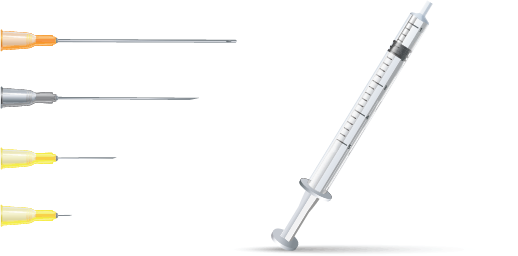
Depending on the required effect, different products for each injection method can be used during the same session.
- 25 G cannula
- 27 G x 1 1/2 needle
- 30 G x 1/2 needle
- 30 G x 4 mm needle
- Syringe 2,5 o 3ml
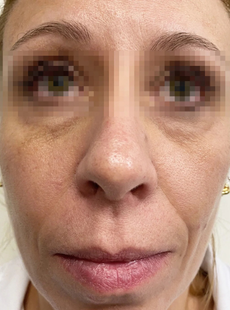 BEFORE
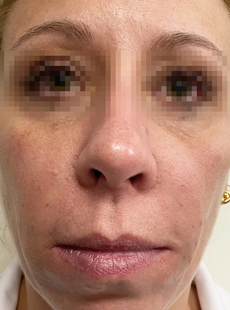 AFTER
AFTER
RESULTS
AFTER
3 SESSIONS
WITH 21-DAY
INTERVALS
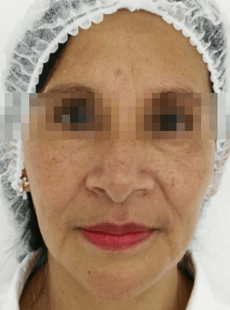 BEFORE
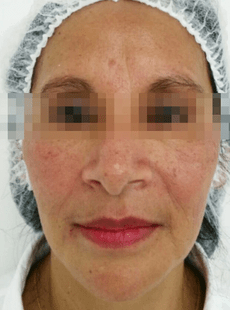 AFTER
AFTER
What are the main indications and limitations of the VPA Technique? +
The VPA Technique is primarily indicated for improving skin quality, addressing signs of aging, and optimizing skin texture and firmness.
However, it is important to understand that this technique is not intended to replace procedures designed for deep volumization or the correction of advanced structural laxity. Instead, it should be considered part of a comprehensive therapeutic approach tailored to the patient’s needs.
How is the appropriate product selected according to the patient’s age? +
Product selection is based on the biological condition and structural needs of the tissue at each stage of aging.
For younger patients, typically between 28 and 39 years old, the main objective is to improve hydration and optimize the dermal environment. In these cases, INNO-CE Moist is recommended.
Between the ages of 40 and 55, structural changes become more evident, and INNO-CE BiDens is used to improve tissue density and overall skin quality.
For patients over 55 years old, the focus shifts toward deeper regenerative stimulation, making INNO-CE MESHA Essence the preferred option.
In all cases, treatment protocols should be adapted individually to address the specific needs of the tissue and achieve a precise and balanced therapeutic approach.
What injection depth and volume are recommended in the VPA Technique? +
The VPA Technique is performed at the subdermal level using small and controlled volumes per injection point. The objective is to achieve adequate tissue stimulation while confirming the correct placement of the product.
More important than the absolute volume is maintaining technical consistency throughout the procedure, including uniform depth, equal product distribution, and homogeneous application patterns. This contributes both to treatment safety and to achieving balanced therapeutic results.
Typically, the technique is performed using approximately 0.1 to 0.15 ml per application, depending on the vector line or scalar magnitude being treated.
How does the VPA Technique differ from conventional mesotherapy? +
The main difference lies not in the injection itself, but in the therapeutic concept behind the intervention.
Conventional mesotherapy is generally focused on the pharmacological action of the product and its distribution within the tissue. In contrast, the VPA Technique introduces a second dimension of analysis: the mechanical interaction between the treatment and the structural architecture of the tissue.
This means that the placement of injection points, application direction, and treatment organization are carefully designed according to a vector-based force distribution model. As a result, the procedure becomes a biomechanically guided intervention rather than a passive injection technique.
What scientific evidence supports the concept of force redistribution in the VPA Technique? +
The VPA Technique is based on well-established scientific principles related to mechanotransduction and connective tissue biomechanics. Although the technique itself represents a conceptual therapeutic approach, its foundation lies in the understanding that fibroblasts actively respond to mechanical stimuli by modifying their metabolic activity, collagen synthesis, and extracellular matrix organization.
Additionally, the three-dimensional architecture of connective tissue and the fascial system allows forces to be transmitted through interconnected collagen networks. The VPA Technique applies these biological and biomechanical principles clinically, integrating them into a structured therapeutic model designed to optimize tissue response and skin quality.
How are the vectors defined in the VPA Technique? +
Vector orientation is determined based on three key elements: the anatomy of the treated area, the natural tension lines of the tissue, and the structural changes associated with aging.
In clinical practice, this requires analyzing how forces are distributed across each facial region and adapting the intervention accordingly. The vectors are therefore not arbitrary, but rather a clinical interpretation of tissue biomechanics aimed at improving treatment reproducibility and personalization.
Is the effect of the VPA Technique mechanical, biological, or both? +
The final tissue response is the result of a synergy between both biological and mechanical effects.
On one hand, the injected product exerts a biological action on cells and the extracellular matrix. On the other hand, the technique itself introduces an organized mechanical stimulus capable of influencing tissue tension distribution.
The interaction between these biological and mechanical components is what defines the overall behavior of the tissue. The VPA Technique is specifically designed to optimize this interaction in a controlled and reproducible manner.
What clinical results have been observed with the VPA Technique and when can they be expected? +
Clinically, the VPA Technique has demonstrated improvements in skin quality, tissue turgor, and overall skin homogeneity.
Initial changes are often visible within the first few weeks, particularly in skin hydration and texture. More structural improvements related to tissue remodeling develop progressively over time as the biological response evolves.
As with any regenerative approach, outcomes depend on multiple factors, including the initial condition of the tissue, the selected product, and the correct execution of the technique.